Allergen information for food stalls
A food stall must tell customers if its food contains any of the 14 allergens, including food given away free. The Food Standards Agency says the information must be accurate, available and easy to access. Loose food can be covered verbally with a sign, and food packed before a customer chooses it needs a full label.
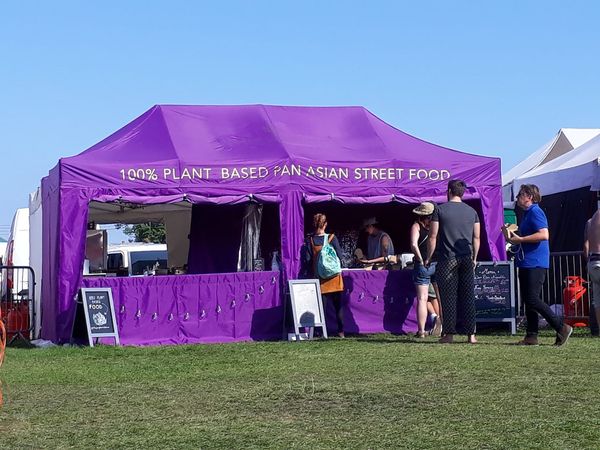
What the law asks of a food stall
The Food Standards Agency (FSA) guidance on allergen information for non-prepacked food says food businesses must tell consumers if they have used any of the 14 mandated allergens as an ingredient. Mandatory allergen information must be accurate, available and easily accessible, and the duty applies to food given away free. The FSA's summary of the guidance lists market stalls among the businesses it is written for.
Three situations matter on a stall. Food made or served loose, such as a burger cooked to order or a cake sold by the slice, falls under the non-prepacked rules. Food you pack yourself before the customer chooses it is prepacked for direct sale (PPDS) and needs a full label. Bought-in packaged goods carry the manufacturer's label. The sections below cover each case.
This guide covers England and Wales, with notes on Scotland and Northern Ireland near the end. It is general information. Check with the council's food safety or trading standards team where a decision depends on it.
The 14 allergens
This is the list published on GOV.UK's page on the information businesses provide. The FSA's allergen guidance for food businesses uses the same list.
| Allergen | Examples or qualifier given |
|---|---|
| Celery | Listed on its own |
| Cereals containing gluten | Wheat, rye, barley and oats |
| Crustaceans | Prawns, crabs and lobsters |
| Eggs | Listed on its own |
| Fish | Listed on its own |
| Lupin | Including lupin seeds and products made from them |
| Milk | Listed on its own |
| Molluscs | Mussels and oysters |
| Mustard | Listed on its own |
| Peanuts | Listed on its own |
| Sesame | Listed on its own |
| Soybeans | Listed on its own |
| Sulphur dioxide and sulphites | Only at more than 10 parts per million |
| Tree nuts | Almonds, hazelnuts, walnuts, Brazil nuts, cashews, pecans, pistachios and macadamia nuts |
The FSA best practice guidance says to name the specific nut or cereal in words. A card that says only nuts leaves a customer with a cashew allergy guessing about almonds.
Loose, PPDS and prepacked food on a stall
| Type of food | Example on a stall | What the stall must provide |
|---|---|---|
| Non-prepacked (loose) | Burger cooked to order, wrap made to order, cake sold by the slice, drink made to order | Allergen information for the 14 allergens, in writing or verbally, with a clearly visible notice about how to get it |
| Prepacked for direct sale (PPDS) | Sandwiches, cakes or salads you pack before the customer chooses them | A label with the food name and a full ingredients list, allergens emphasised, since 1 October 2021 |
| Prepacked by a manufacturer | Bought-in crisps, confectionery or drinks | The manufacturer label, with allergens emphasised in the ingredients |
The FSA's PPDS page says food that consumers select themselves from a display unit, food kept behind a counter and some food sold at mobile or temporary outlets can count as PPDS. NCASS's page on Natasha's Law gives a practical test: food counts as PPDS if it is fully or partly enclosed in packaging, cannot be altered without opening it and is ready for sale. It says a sandwich in a folded bag is an example and a burger on an open tray is not. It adds that food packed by the same business and sold from a market stall or mobile unit is PPDS if it was packed before the customer ordered, and that drinks made to order are not PPDS.
The FSA's PPDS labelling guidance says food packed after the customer orders, or packed by one business and supplied to another, is outside PPDS labelling. The FSA and Food Standards Scotland evaluation of the rules records that the new law came into force across the UK on 1 October 2021. Allergen information is still required for food that does not need a label. North Tyneside Council notes that the FSA runs a PPDS hub with a webinar and tailored guides for different business types.
How to give allergen information for loose food
The FSA best practice guidance says the legal minimum lets information be given by any means, with a sign showing when it will be given verbally. Best practice goes further: provide written information and support it with a conversation. Written information should be clear, comprehensive across all 14 allergens and accurate, and where possible available without having to ask, on the menu or on a counter matrix.
- Put the allergens on the menu board, a separate card or an allergen matrix that sits at the counter.
- If information is only given on request, display a sign or a menu message saying so. The FSA suggests wording along the lines of a menu with allergen information being available from staff.
- Ask every customer about allergen requirements, or display a prominent sign inviting them to speak up. The FSA suggests placing such messages near the top of menus.
- If you use symbols, add the allergen name or a key.
- Break dishes into components where you can, so a customer can ask for a change instead of avoiding the dish.
- For orders taken online or by phone, make written information available before ordering and again on delivery.
Food given away is covered. A sample on a tasting spoon needs the same information as a sold portion.
Running the conversation at the counter
The FSA says that once a customer has an allergen requirement, staff should cover at least four points: which foods to avoid, whether the customer has seen the written information, the risk of cross-contact and whether the customer has enough information to choose safely. It also says the requirement should be recorded and passed in writing to the person preparing and serving the food, with the food clearly labelled and the server confirming verbally.
- Ask which allergen the customer needs to avoid.
- Check your written record for the dish. Do not answer from memory.
- Say what the dish contains and what your set-up cannot guarantee.
- If you cannot confirm an answer, say so. The FSA says staff must tell customers if they cannot confirm the information.
- Pass the order on in writing to whoever is cooking and confirm it out loud when you hand it over.
Keeping records accurate
Accuracy is a legal requirement, according to the FSA. Its best practice guidance suggests keeping ingredient records, checking with suppliers for changes, minimising last-minute substitutions, keeping recipes consistent, reviewing allergen information regularly and training staff.
For a stall, that means writing down every ingredient in every dish, including sauces, stock, oils and toppings, checking the label on each delivery and updating the card or matrix on the day a recipe or supplier changes. Essential Food Hygiene lists a separate Level 2 allergy awareness course alongside its street food hygiene course, which may suit staff who serve customers. Food Standards Scotland lists free online allergen training courses, a general course and an advanced one for hospitality and catering, and says food businesses must make sure staff are trained on managing allergens.
Cross-contact, shared oil and may contain warnings
The FSA's allergen guidance for food businesses lists cleaning utensils between uses, washing hands between dishes, storing ingredients in closed, labelled containers and keeping allergen ingredients separate. It gives shared cooking oil as an example: gluten-free chips cooked in oil used for battered fish pick up gluten.
The same guidance says that if cross-contamination cannot be avoided, tell customers you cannot provide an allergen-free dish and do not make gluten-free or wheat-free claims. It also says vegan meals may still contain traces of animal-based allergens.
Precautionary 'may contain' labels are voluntary. The FSA's allergen information page says there is no specific legal requirement to use them, but food must be safe and customers must have the information to make safe choices. Warwick District Council's stall standard says that unless all 14 allergens are fully excluded, a stall should display a notice saying traces may be present and advising customers to speak to staff.
Enforcement and who to ask
Failing to meet the allergen rules is a criminal offence, according to Norfolk County Council, which says trading standards enforces the Food Information Regulations 2014 and environmental health departments handle loose food and cross-contamination. Officers can issue improvement notices, and failing to comply with one is itself an offence. Business Companion, the Trading Standards guidance site, also describes failing to flag the 14 allergens as a criminal offence.
The FSA suggests contacting the local enforcement agency, usually the trading standards team of the local authority and sometimes environmental health, if you have a specific question about your stall. The sources checked for this guide did not give maximum fine amounts, so none are quoted here.
Scotland and Northern Ireland
- Scotland. Food Standards Scotland says allergen information for non-prepacked food must be available before the customer buys, and can be given on a menu, chalkboard, shelf label or verbally by staff. PPDS food must be fully labelled with the 14 allergens emphasised in the ingredients list.
- Northern Ireland. The FSA's best practice guidance applies to England, Wales and Northern Ireland, and names the Food Information Regulations (Northern Ireland) 2014 as the legislation for Northern Ireland.
For England and Wales the FSA guidance names assimilated Regulation (EU) No 1169/2011, the Food Information Regulations 2014 for England and the Food Information (Wales) Regulations 2014.
What to do next: a stall checklist
- List every dish and drink on your menu, and write down every ingredient, including sauces, oils and toppings.
- Mark the 14 allergens against each dish and name the specific nut or cereal.
- Put the information where customers can read it without asking, and add a sign inviting questions.
- Label anything you pack before the customer chooses it, with the name and a full ingredients list, allergens emphasised.
- Brief everyone who serves on the allergen record, the four counter questions and what to say when they cannot confirm something.
- Check supplier labels on every delivery and update the card on the day a recipe changes.
- Keep separate utensils and surfaces where you can, and tell customers honestly where you cannot.
- Read our guides to food business registration and setting up a food stall for the registration and layout side.
Frequently asked questions
Do I need allergen information for food I give away?
Yes. The Food Standards Agency says mandatory allergen information must be accurate, available and easily accessible, and that this applies to food given away free of charge. A free sample on a tasting spoon needs the same information as a sold portion, so keep the card or matrix visible.
Can I give allergen information verbally?
For loose food, the legal minimum lets you give the information by any means, including verbally, with a sign showing when it will be given verbally. The FSA says best practice is written information backed by a conversation. PPDS food is different and needs a full label.
What is Natasha's Law and does it apply to my stall?
It is the common name for the PPDS labelling rules. Since 1 October 2021, food packed on the same premises before a customer selects or orders it needs a label with the food name and a full ingredients list, allergens emphasised. NCASS says that applies to food packed by a market stall or mobile unit before ordering.
What if a customer asks about an ingredient I am unsure of?
Do not guess. The FSA says staff should check records and must tell customers if they cannot confirm the information. Check your written ingredient record or supplier information, say honestly what you do not know and suggest another item or stall if needed.
Do drinks need allergen information too?
Yes, if a drink contains any of the 14 allergens, such as milk in a coffee. The FSA guidance covers drinks made to order, and NCASS says drinks made to order are not PPDS. Drinks packed before the customer orders could be PPDS and need a label.
Who enforces the allergen rules on a market stall?
Local authorities do. Norfolk County Council says trading standards enforces the Food Information Regulations 2014 and environmental health handles loose food and cross-contamination. The FSA says to contact the local enforcement agency, usually trading standards, with specific questions about your stall.
Commercial gazebos for professional traders
Insurance, safety and organiser checks all start with sound kit. Gala Tent makes commercial gazebos for traders who work events week after week.
Useful pages on our sister sites
Event Industry Trader is published by Gala Tent. These pages from Gala Tent and the wider Gala group go further on the kit, branding and payments covered here.
Where to check the rules
- Food Standards Agency: allergen information for non-prepacked food, best practice
- Food Standards Agency: non-prepacked food guidance summary
- Food Standards Agency: PPDS allergen labelling guidance
- Food Standards Agency: allergen guidance for food businesses
- GOV.UK: information businesses provide about food allergies
- Food Standards Agency: PPDS allergen labelling
- Food Standards Agency: allergen information for food businesses
- Food Standards Agency: PPDS evaluation introduction
- Food Standards Scotland: allergen labelling
- NCASS: Natasha's Law and PPDS labelling
- Norfolk County Council: enforcement of the Food Information Regulations
- Business Companion: food allergens
- North Tyneside Council: allergens
- Warwick District Council: standard for temporary premises and stalls
- Essential Food Hygiene: how to start a street food business
- Food Standards Scotland: online allergen training courses
Rules vary by council and by event. Confirm requirements with the organiser and the relevant authority before you act.