Food business registration for event traders
Food businesses register with their local council at least 28 days before trading, according to GOV.UK. Registration covers mobile and temporary premises such as stalls and vans, is free and cannot be refused. Some councils treat occasional, small-scale sales differently, so check with the council's food safety team before your first pitch.
Who has to register
According to GOV.UK's starting a food business guidance, written with the Food Standards Agency, anyone who sells, cooks, stores, handles, prepares or distributes food must register. It names home-based, mobile or temporary, online and distance-selling businesses, and says supplying food to the public regularly counts whether it is free or paid for. For event traders that covers stalls, vans, trailers and pop-ups.
Arun District Council lists food stalls and pop-ups among the businesses that must register and says running a food business unregistered is an offence. Wakefield Council lists market stalls, burger vans and ice cream vans, as well as people who make food at home for the public.
Registration is separate from approval. West Devon Council says businesses that handle meat, fish, egg or dairy products for supply to other businesses may need approval from the council instead, so ask if you plan to supply other traders with those products.
Occasional sales and one-off events
Councils do not all describe occasional trading in the same way. East Cambridgeshire District Council says registration is not required for occasional, small-scale food handling, and that food at charity and community events such as street parties, school fetes and fundraisers must still meet food law and be safe to eat. Wakefield Council lists one-off events and cooking only for friends and family as exempt. Arun District Council gives no separate rule for one-off events and lists pop-ups as businesses that must register.
Those pages do not say how to tell whether an event counts as occasional and small-scale. If you trade at several events in a season, or sell as a business, register. If you are unsure, the cost of asking is one email and the cost of registering is nothing.
When to register and what it costs
GOV.UK says register at least 28 days before you start trading. It advises against registering much earlier, so aim for roughly 28 days before you are ready. If you are already trading unregistered, register as soon as possible. Registration is free and cannot be refused. Councils repeat this: Wakefield, Cambridge City Council, West Devon, Arun and Edinburgh all describe registration as free.
Worked example
Say your first pitch is Saturday 13 March 2027. Twenty-eight days before is Saturday 13 February 2027. Register by then, and sooner if the organiser wants proof with your application. Many organisers ask for confirmation of registration before they confirm a pitch, so registering early helps.
After you register, tell the council if you stop trading, add trading names, add a mobile unit or change your business model. GOV.UK says one registration can cover multiple trading names, and that changes should prompt you to review your hazard analysis.
Which council to register with
| Council | What it says | Published at |
|---|---|---|
| West Devon Council | Vans must register with the council for the location where the vehicle is normally kept or stored overnight | Register a food business page |
| Wakefield Council | Mobile caterers and market stall operators register where the business is based, where the stall or van is kept or where food is stored overnight. Premises in more than one area need separate registrations. | Register a food business page |
| Cambridge City Council | Operating in more than one council area means registering with each one | Food business registration page |
| Arun District Council | Mobile traders register with the address where the unit is kept overnight | Food premises registration page |
| Lisburn and Castlereagh City Council (NI) | Register with the council where the van, trailer or stall is normally kept or returns to between trading | Mobile food businesses guide |
| Falkirk Council (Scotland) | A separate form is needed for each mobile food unit, and details are shared with other councils through the Scottish National Database | Register your food business page |
The wording differs, which is why the safest question to ask is: where is my unit kept between trading days, and which council covers that address? Register there first, then ask whether any other council where you trade expects a notification. Links to the pages above: West Devon, Wakefield, Cambridge, Arun, Lisburn and Castlereagh and Falkirk.
What happens after you register: inspections and ratings
GOV.UK says the council's food safety team inspects, usually without warning, and officers must show identification. Higher-risk businesses are prioritised, so a first inspection can take several months. Officers check the premises, how you handle food and your food safety management system, and may take food samples or photographs. GOV.UK describes inspections as supportive, and says you get a reasonable time to make changes unless there is an immediate public health risk.
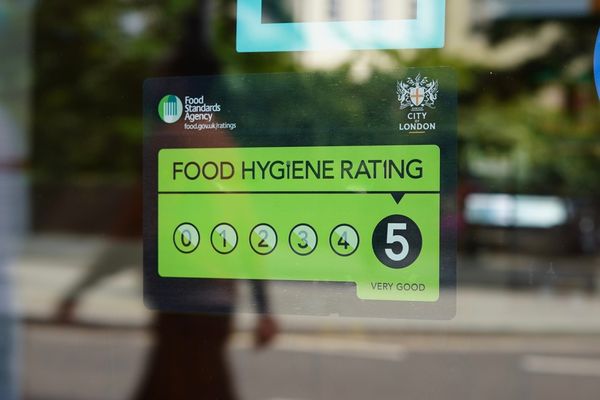
The FHRS guidance for businesses says ratings run from 5 (very good) to 0 (urgent improvement is necessary), and inspection frequency ranges from six months for the highest-risk businesses to two years for lower-risk ones. Display is voluntary in England and mandatory in Wales and Northern Ireland. You must appeal in writing within 21 days of being notified. You can ask for a re-rating visit after making improvements, and some councils charge for it. Our guide to the food hygiene rating for event traders goes through the scale.
In Scotland the Food Hygiene Information Scheme gives a Pass or Improvement Required outcome, with a certificate for the door or window.
Food safety management, records and training
GOV.UK says to carry out a risk assessment, use HACCP procedures or a HACCP-based system such as Safer Food Better Business, and follow the 4Cs of cleaning, cooking, chilling and cross-contamination. It also asks for traceability records of suppliers and customers, allergen information for the 14 allergens, and trained staff. A food hygiene certificate is not compulsory, but GOV.UK recommends a qualification.
Essential Food Hygiene, a training provider, lists a street food hygiene course at £12.99 plus VAT, and says local authorities and environmental health officers recommend refresher training every three years, though no specific law requires it. The price comes from the provider's own page, so treat it as one example of cost.
Extra rules some councils add for event traders
Food law is national. Councils also publish their own expectations for stalls. Warwick District Council's standard for temporary premises and stalls at markets and events is a clear example.
| Item | What Warwick lists |
|---|---|
| Permit to Trade | Businesses registered elsewhere must complete a Permit to Trade form, to reach the food safety team at least 2 weeks before the event |
| Hygiene rating | Only businesses rated 3 to 5 under the national scheme may operate |
| Hand washing | Hot and cold running water, or pre-mixed water at about 45°C, with soap and paper towels, for stalls handling open ready-to-eat food |
| Chilled food | Ready-to-eat food that could support harmful bacteria kept at or below 8°C |
| Cooking and reheating | Core temperature of 75°C for 30 seconds |
| Hot holding | 63°C or above, checked with a sanitised probe thermometer |
| Training | Staff handling open high-risk food should hold a Level 2 Award in Food Safety or equivalent |
Another council may set different conditions, so check the rules for each area where you trade. Lisburn and Castlereagh City Council notes that if you trade outside your registering area, the other council may consult your registering council, and breaches found there can lead your registering council to review and reduce your rating.
Scotland and Northern Ireland
- Scotland. Edinburgh and Falkirk both require registration before trading. Edinburgh says to register at least 28 days before opening and that registration is free. Falkirk asks for 2 to 4 weeks. Scotland has its own Food Hygiene Information Scheme.
- Northern Ireland. Lisburn and Castlereagh says register at least 28 days before trading, that it is free, and that you register with the council where the unit is normally kept. Display of the rating is mandatory in Northern Ireland, according to the FHRS guidance.
GOV.UK's guidance covers England, Wales and Northern Ireland and does not mention Scotland. Use the local council in Scotland as your first contact.
What to do next: a checklist
- Decide where your van, trailer or stall is kept between trading days and find the council for that address.
- Register online or by form at least 28 days before your first pitch.
- Ask whether the council treats occasional or community trading differently.
- Ask the council and each organiser whether any extra council where you trade needs a notification or permit.
- Set up a HACCP-based food safety system and keep your daily records.
- Book a Level 2 food hygiene course if nobody on the team holds one.
- Prepare for an unannounced visit: probe thermometer, hand washing, cleaning materials and allergen information.
- Keep your registration confirmation and send a copy with every pitch application. Our guide to allergen information for food stalls covers the 14 allergens.
This guide is general information. Check with the council's food safety team where a decision depends on it.
Frequently asked questions
How long before trading must I register a food business?
GOV.UK says at least 28 days before you start trading, and advises against registering much earlier than that. If you are already trading without registering, register as soon as possible. Registration is free and cannot be refused, according to GOV.UK.
Do I need to register a food van or stall?
Yes in most cases. GOV.UK names mobile or temporary premises among the businesses that need to register, and councils such as Wakefield, Arun and West Devon list stalls and vans. Mobile units normally register where the vehicle is kept between trading days, so ask the council for that address.
Which council do I register with if I trade in several areas?
Wakefield Council says mobile caterers and market stall operators register where the business is based, where the stall or van is kept or where the food is stored overnight, and that premises in more than one area need separate registrations. Cambridge City Council says to register with each area. Ask your council to confirm.
Does food business registration cost anything?
No. GOV.UK says registration is free, and councils including Wakefield, Cambridge City, West Devon and Edinburgh state the same. Some councils charge for optional services, such as a re-rating visit or extra advice, so ask what the council charges for.
What does a food hygiene inspection check?
GOV.UK says officers look at the premises, how you handle food and your food safety management system. They usually arrive unannounced, must show identification and may take food samples or photographs. The rating reflects conditions on the day and does not cover food quality or presentation.
Do I need a hygiene certificate to sell food at events?
GOV.UK says a food hygiene certificate is not compulsory, but staff must be adequately trained and you must be able to show it. A qualification is recommended. Some councils go further: Warwick District Council says staff handling open high-risk food should hold a Level 2 Award in Food Safety or equivalent.
Gazebos built for regular pitches
Once a pitch is confirmed, the stall needs to fit it. Gala Tent makes market stall gazebos for traders who set up week after week.
Useful pages on our sister sites
Event Industry Trader is published by Gala Tent. These pages from Gala Tent and the wider Gala group go further on the kit, branding and payments covered here.
Where to check the rules
- GOV.UK: starting a food business
- GOV.UK: Food Hygiene Rating Scheme guidance for businesses
- Wakefield Council: register a food business
- Cambridge City Council: food business registration
- West Devon Council: register a food business
- Arun District Council: food premises registration
- East Cambridgeshire District Council: food at events
- City of Edinburgh Council: register a food business
- Falkirk Council: register your food business
- Lisburn and Castlereagh City Council: mobile food businesses
- Warwick District Council: standard for temporary premises and stalls
- Food Standards Scotland: Food Hygiene Information Scheme
- Essential Food Hygiene: how to start a street food business
Rules vary by council and by event. Confirm requirements with the organiser and the relevant authority before you act.