Fire safety for stalls and gazebos
Fire safety for an event trader means a written fire risk assessment for your pitch, the right extinguishers and a fire blanket where you cook, controlled gas and generators, and proof that your canopy is fire retardant. Organisers set the exact rules, so read the trader terms before you pack.
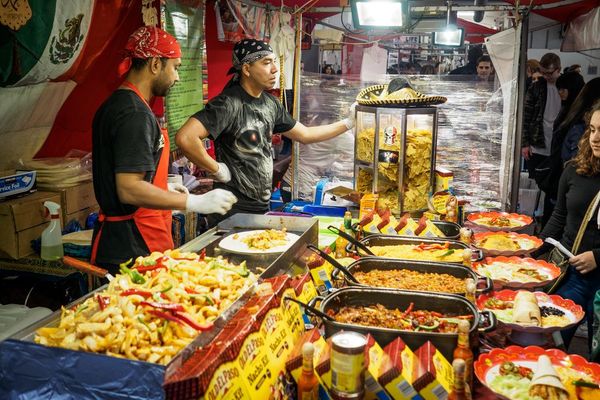
Who is responsible for fire safety at an event
Fire safety law in England and Wales rests on the Regulatory Reform (Fire Safety) Order 2005. GOV.UK's guidance on workplace fire safety says the responsible person is whoever has control of the premises, and that where there is more than one, they must work together. GOV.UK also notes that Scotland and Northern Ireland have different rules.
At an outdoor event the organiser usually holds the site-wide duty. GOV.UK's fire safety guide for open-air events and venues is written for the people who run them, and the page is labelled as applying to England. Cheshire Fire and Rescue Service says on its outdoor events page that organisers should record their decisions in a fire risk assessment and an event management plan, and that an inspecting officer may review both.
Many organisers therefore ask each trader for a pitch-level assessment. You control the stove, the heater, the gas bottle and the generator on your own pitch, so that part of the job lands with you. Councils and fire services differ in what they publish, and this guide does not replace advice from the council or fire and rescue service for your event.
Your fire risk assessment in five steps
The GOV.UK five-step fire risk assessment checklist gives a structure you can apply to a stall:
- Identify fire hazards. GOV.UK lists electrical equipment, heating, cooking, smoking and housekeeping among the sources. On a stall that means stoves, heaters, extension leads, stock packaging and rubbish.
- Identify who is at risk. Customers, queues, your helpers and neighbouring traders all count.
- Evaluate the risk and act. Keep ignition sources away from fuel, provide extinguishers where needed and decide who calls the fire and rescue service.
- Record your findings, make a plan and train the people who work with you.
- Review the assessment regularly and after changes, such as new equipment, a new product or a near miss.
On recording, Article 9 of the Order, as published on legislation.gov.uk, requires a written record where the employer has five or more employees or where a licence covers the premises. Organisers often go further. The fire risk assessment form from Cambridgeshire Fire and Rescue Service says it should be kept on site for inspection and warns that failing to complete one can mean removal from the site. Telford and Wrekin Council publishes a similar checklist, and says you may use another method of assessment if it suits your circumstances.
Extinguishers and fire blankets: what to carry
The right extinguisher depends on what could burn. The NCASS Festivals and Outdoor Catering Guide 2026 sets out suggested equipment for caterers, and event organisers publish their own versions. The table shows where published sources agree and where they differ.
| Hazard on the pitch | Equipment suggested | Where it is published |
|---|---|---|
| Frying oil | Fire blanket and a 6 litre wet chemical extinguisher | NCASS 2026 festival guide. Aviva also lists wet chemical extinguishers for oil and fat fires. |
| Gas burners | Dry powder extinguisher near the cooking area | Nantwich Food Festival trader fire risk assessment 2026 |
| Electric hotplates and ovens | CO2 extinguisher near the cooking area | Nantwich Food Festival trader fire risk assessment 2026 |
| Barbecue or open flame | Dry powder (Nantwich Food Festival) or a 6 litre water extinguisher (NCASS marquee LPG guidance) | Two sources, two answers. Follow the organiser. |
| Generator and electrical appliances | CO2 extinguisher sized to the equipment; NCASS marquee guidance gives 2 litres as a starting point | NCASS 2026 festival guide and NCASS marquee LPG guidance |
| Waste bins | 6 litre water extinguisher | NCASS 2026 festival guide |
| Vehicle cab and engine | 2 kg dry powder extinguisher | NCASS 2026 festival guide |
On servicing, the GOV.UK checklist says extinguishers should be maintained annually. NCASS adds that a competent person should inspect them each year, that you should keep the certificate, and that water, foam and powder units need an extended service every five years while CO2 units need an overhaul every ten. Telford and Wrekin Council's checklist asks for equipment tested within the last 12 months and says a certificate of compliance is normally required.
Leicestershire Fire and Rescue Service's open-air events guidance says people without training should not be expected to tackle a fire. NCASS says never to fight a fire that involves an LPG cylinder with an extinguisher and to evacuate instead. A short briefing for everyone on the stall covers both points.
Event terms can name the kit exactly. As of November 2026, the Great Exhibition Road Festival 2026 trader terms require an in-date 5 kg dry powder extinguisher and a fire blanket, with the type, quantity and size recorded in your risk assessment. The Broadstairs Food Festival trader terms ask for extinguishers that are visible, accessible and suitable for the fuel you use.
Gas and LPG on a stall
The HSE's gas safety in catering guidance says anyone installing or repairing gas equipment must be Gas Safe registered, and gives annual inspection as a reasonable minimum alongside the manufacturer's advice. It suggests asking to see the engineer's Gas Safe ID card.
The NCASS 2026 festival guide sets out what many organisers expect for LPG:
- A Gas Safe engineer competent in LPG checks and certifies your set-up.
- Cylinders stay at least 1 m from ignition sources, combustible materials and gazebo sides, and at least 2 m from untrapped drains and cellar openings.
- Cylinders stand upright outdoors, secured against toppling, and away from walkways and traffic.
- You hold no more than the number in use plus one spare.
NCASS's guidance on LPG in marquees, stalls and gazebos adds that cylinders must not be sited inside the structure, that hoses should be replaced at five years from manufacture or three years from purchase (sooner if worn), and that the owner or a nominated person should check cylinders, regulators and hoses at least monthly. It also says butane is not recommended for commercial mobile or outdoor catering. Aviva's risk guidance for street caterers and stalls gives the same view on butane.
On carbon monoxide, the HSE says domestic alarms are not normally suitable for commercial catering and that ventilation and servicing remain the main safeguards. Our guide to gas and electrical safety for traders covers the equipment side in more detail.
Cooking, heaters and open flames
Aviva's guidance says deep fat fryers are a serious ignition risk, should never be left unattended, and need thermostatic controls and over-temperature cut-outs. It also says hot oil and charcoal must cool fully before disposal and should never go into waste bins, and it lists camping stoves, disposable barbecues and portable heaters as items to prohibit on caterers' stalls.
The NCASS gazebo guide says to keep appliances at least 600 mm from combustible materials, keep the back panel off and the front at least half down whenever appliances are lit, and avoid wrapping appliances in foil because foil starves the burner of air. Organiser forms add their own rules. The Nantwich Food Festival form asks for a fire blanket near the cooking area, an ash receptacle for barbecues and a clear area around cooking free of combustible waste, and expects traders to report any fire, however small. The Telford and Wrekin checklist says fireworks, garden flares, household candles and tea lights must not be stocked or sold. On heaters, the Broadstairs Food Festival terms say heating and cooking appliances must be positioned for complete safety and must not run on alcohol, petrol or oil.
Generators and power
Leicestershire Fire and Rescue Service lists generator fuel and hot surfaces as fire risks and encourages diesel over petrol where possible. The NCASS 2026 guide says generators should be enclosed and kept apart from other equipment, not covered, and refuelled only when off and cool. The Telford and Wrekin Council checklist and the Cambridgeshire Fire and Rescue template both state that petrol generators are not permitted on site, so check before you bring one. Event terms read in November 2026 show the same split. The Great British Food Festival trader terms say petrol generators are not permitted at any of its events and allow diesel outside the producer marquees with prior agreement. The Great Exhibition Road Festival 2026 terms say generators are not permitted under any circumstances and accept battery power, and the Teddy Rocks Festival trader terms do not permit brought-in generators for health, safety and noise reasons.
Aviva recommends keeping a portable generator at least 2 m clear of combustibles and never refuelling it while it runs. The HSE's event electrical safety guidance says to route cables to limit trip hazards, use cable ramps where cables cross walkways, and keep generator enclosures away from public areas.
On testing, the HSE's PAT questions and answers says the Electricity at Work Regulations 1989 require equipment to be kept in a safe condition and that PAT is not itself compulsory. Many organisers still ask for test records, so keep them with your other paperwork.
Canopy, layout and clear routes
Organisers commonly ask for evidence that your canopy is fire retardant. The NCASS gazebo guide describes a B1 rating, BS 7837 certification and a sewn-in label as the usual proof, and says to ask the manufacturer for the certificate if you cannot find a label. The NCASS 2026 festival guide lists gazebo fire resistance evidence from the manufacturer among documents organisers can request. Gala Tent's gazebo safety guide for organisers is one manufacturer's explanation of why certification and weighting come up so often.
Spacing varies by source. The NCASS gazebo guide says to keep at least 3 m between your gazebo and the next tented structure. Aviva's street caterer guidance suggests about 6 m between structures. Leicestershire says only that adjacent structures should be an adequate distance apart. Treat the organiser's site plan as the rule on the day.
Croydon Council's fire safety for markets guidance says stalls must not block emergency access routes, exits or fire hydrants, and that you should hold only the stock you need for trading. Park Insurance's festival planning checklist makes the same point from the organiser's side, advising that fire exits stay clear and flammable materials are stored appropriately.
What to do next: pre-event fire checklist
- Complete and sign your fire risk assessment, or the organiser's form, and carry a copy.
- Check extinguisher and fire blanket service dates and keep the certificates.
- Confirm your Gas Safe LPG certificate is dated within the last 12 months if you use gas.
- Inspect hoses, regulators and cylinder fittings, and pack only the cylinders you need plus one spare.
- Find your canopy's fire retardant label or certificate and bring a copy.
- Check whether the organiser bans petrol generators, camping stoves or heaters.
- Brief everyone on the stall on exits, extinguisher locations and who calls 999.
- Link this to your general stall risk assessment and the list in what event organisers ask to see.
Frequently asked questions
Do I need a fire extinguisher on my stall?
There is no single rule for every stall. GOV.UK says extinguishers should be provided where your assessment shows they are needed. Organisers often require one for any pitch that cooks or uses heat, and some name the type, so read the trader terms and ask the organiser if the wording is unclear.
What type of extinguisher do I need for a fryer?
NCASS suggests a fire blanket and a 6 litre wet chemical extinguisher for frying oil, and Aviva lists wet chemical extinguishers for oil and fat fires. Nantwich Food Festival also asks traders with fryers for a wet chemical extinguisher near the cooking area. Confirm the type with the organiser before you buy.
How often should an extinguisher be serviced?
GOV.UK says extinguishers should be maintained annually. NCASS adds that a competent person should inspect them each year and that you should keep the certificate. Water, foam and powder units also need an extended service every five years, and CO2 units an overhaul every ten.
Does my gazebo canopy have to be flame retardant?
Many organisers ask for it. NCASS describes a B1 rating or BS 7837 certification as the usual evidence, shown by a sewn-in label or a manufacturer certificate. Whether it is required depends on the event, so check the trader terms and keep a copy of the paperwork with you.
Can I use a petrol generator at an event?
Some organisers ban them. The Telford and Wrekin Council checklist and the Cambridgeshire Fire and Rescue template both state that petrol generators are not permitted, and NCASS calls petrol the least desirable fuel. Ask before you travel, because you may be turned away.
Do the same fire rules apply in Scotland and Northern Ireland?
GOV.UK says Scotland and Northern Ireland have different rules from England and Wales, and its open-air events guide is labelled as applying to England. Check with the local fire and rescue service and the organiser for events outside England, and ask what fire paperwork they expect from traders.
Commercial gazebos for professional traders
Insurance, safety and organiser checks all start with sound kit. Gala Tent makes commercial gazebos for traders who work events week after week.
Useful pages on our sister sites
Event Industry Trader is published by Gala Tent. These pages from Gala Tent and the wider Gala group go further on the kit, branding and payments covered here.
Where to check the rules
- GOV.UK: workplace fire safety, your responsibilities
- GOV.UK: fire safety risk assessment 5 step checklist
- GOV.UK: fire safety risk assessment, open-air events and venues
- Legislation.gov.uk: Fire Safety Order 2005, article 9 risk assessment
- Cheshire Fire and Rescue Service: outdoor events and event safety
- Leicestershire Fire and Rescue Service: fire risk assessment guide, open air events
- NCASS: Festivals and Outdoor Catering Guide 2026
- NCASS: LPG installation in marquees, stalls and gazebos
- NCASS: Gazebo Guide
- HSE: gas safety in catering
- HSE: electrical safety at events
- HSE: PAT, answers to popular questions
- Croydon Council: fire safety for markets
- Cambridgeshire Fire and Rescue: fire risk assessment for traders and market stalls
- Telford and Wrekin Council: traders fire risk assessment checklist
- Nantwich Food Festival: trader fire risk assessment 2026
- Aviva: fire and gas risk guidance for street caterers and stalls
- Park Insurance: festival planning checklist
- Gala Tent: gazebo safety guide for UK event organisers
- Great British Food Festival: trader terms and conditions
- Great Exhibition Road Festival 2026: trader terms and conditions
- Teddy Rocks Festival: trader terms and conditions 2026
- Broadstairs Food Festival: trader T&Cs
Rules vary by council and by event. Confirm requirements with the organiser and the relevant authority before you act.