Do I need a licence to trade at a market or event?
There is no single trading licence in the UK. In England and Wales, trading on a public street may need council street trading consent, food sellers register their food business with the council, and selling alcohol needs authorisation such as a temporary event notice. Council markets and private organisers add their own terms.
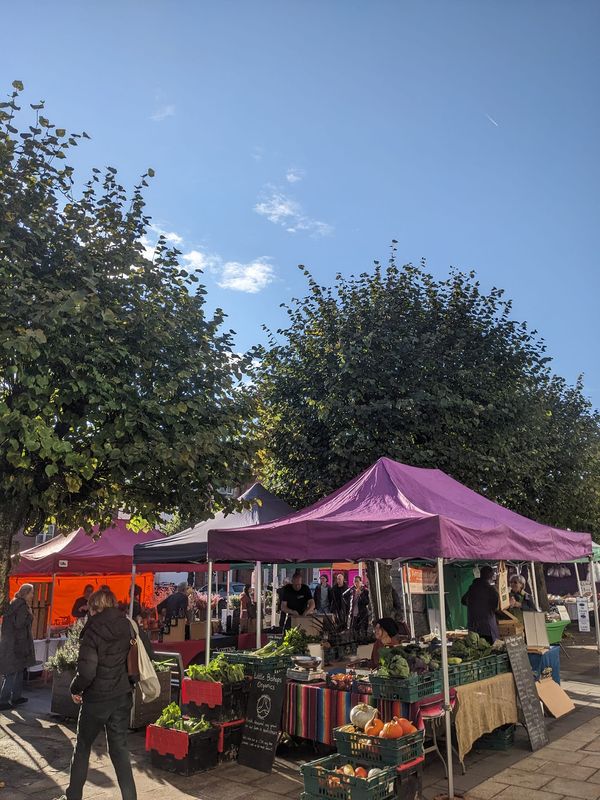
The short answer
No single licence covers all trading. The permissions that apply depend on where the pitch is, what you sell and whether alcohol, music or late hours are involved. This guide covers England and Wales, with a short section on Scotland and Northern Ireland. It is general information, so check with the council for the area you plan to trade in before you spend money on stock or a pitch.
As of November 2026, GOV.UK's street trading licence page says you may need a licence to trade in the street in England and Wales and tells you to contact the council for the area where you want to trade. The same approach works for every permission below. The local council or the event organiser has the final say on what applies to your pitch.
Start with where the pitch is
| Type of pitch | Who usually decides | Questions to ask first |
|---|---|---|
| Council-run or privately run market | The market operator or council market office | What does the pitch application need, and does any other consent apply? |
| Private event, festival or fete | The event organiser, with the council behind them | Which permissions does the organiser arrange, and which must I arrange myself? |
| Public street, pavement or council-designated space | The council street trading team | Is the street a licence street or a consent street, and which days and hours are allowed? |
| Private land such as a car park or field | The landowner, and sometimes the council | Do I have the landowner permission in writing, and does the council need to be told? |
In its guidance on temporary event notices, NCASS, the independent caterers' association, advises checking with the local authority where you plan to trade and notes that many councils are themselves unsure about some of the rules. A short email that says what you sell, where, on which dates and from what kind of unit tends to get the most useful reply.
Council markets and organiser-run events
At a market, the operator allocates pitches and sets the rules. Our guide to booking a pitch at a market covers the application side. The National Market Traders' Federation describes itself as a trade association for market and street traders, events retailers and mobile caterers, and says its membership includes public, product and employer's liability cover with a £10 million limit, a level it notes event operators often ask for.
At events, who arranges the paperwork varies by council. Lichfield District Council's street trading policy says traders at an event apply through the organiser, who passes the details to the council, and that consents are then issued to individual traders. Spelthorne Borough Council tells traders who sell goods or food at an event that they will also need to apply for a one-off street traders licence for that event. Two councils, two different routes.
Park Insurance's festival planning checklist says the licences needed depend on the type of event and recommends applying early because approval can take time. Ask the organiser early which permissions they hold and which ones sit with you.
Some councils limit where food vans can go at all. Blackpool Council says food and drink vendors cannot trade on its prohibited or consent streets, and that suitable sites are likely to be privately owned land, with the landowner's permission and a check with the council's planning department.
Street trading consent and what it costs
GOV.UK says to apply by contacting the council for the area, telling it where and when you want to trade, and paying a fee if one applies. You might be asked for two photographs of yourself. The council can refuse a licence or grant one for fewer days or times than you asked for, and there might be a waiting list. Our guide to street trading consent goes through the process step by step.
Fines are real. GOV.UK says trading without a licence, or breaking the conditions of one, can bring a fine of up to £1,000, and a licence can be suspended or withdrawn.
| Council | Type of consent | Fee | Note |
|---|---|---|---|
| Solihull Metropolitan Borough Council | Daily street trading consent | £37.50 | Schedule effective from 1 April 2026 |
| Solihull Metropolitan Borough Council | Mobile street trading consent | £1,355 | Schedule effective from 1 April 2026 |
| Solihull Metropolitan Borough Council | Borough-wide consent, outside the town centre | £1,975 | Schedule effective from 1 April 2026 |
| Mid Sussex District Council | Daily (temporary) | £44 | Fees document titled 2026 |
| Mid Sussex District Council | 2 to 3 day event (temporary) | £65 | Fees document titled 2026 |
| Mid Sussex District Council | Weekly (recurring) | £118 | Fees document titled 2026 |
These figures come from the Solihull fee schedule and the Mid Sussex fee document and show the spread between a single day and a standing consent. Other councils use different categories and amounts, so ask for the current schedule for your area.
Pedlars and the pedlar certificate
GOV.UK says you need a pedlar's certificate to sell door to door. The certificate allows you to sell on foot anywhere in the UK, carrying your goods, though a small trolley is acceptable. You must be 17 or over and have lived in the local authority area for at least 28 days. You apply at a police station with two photos, identification, proof of address and referee details. The certificate costs £12.25 and lasts one year, and working as a pedlar without one can bring a fine of up to £200.
A pitch is a different matter. GOV.UK says that if you have a pitch you need a street trading licence instead, and Blackpool Council says pedlars cannot set up a fixed pitch and must keep moving from place to place. Stallholders at markets and events should treat the pedlar certificate as a separate route that does not suit a static stall.
Food, alcohol, music and late-night hot food
- Food. GOV.UK's starting a food business guidance says to register with the local council at least 28 days before trading, and this includes mobile or temporary premises. Registration is free. Read our guide to food business registration for event traders.
- Alcohol. A temporary event notice (TEN) is the usual route for a one-off event. As of November 2026, GOV.UK's temporary events notice page for Sunderland lists a fee of £21. Read our guide to selling alcohol at events before you plan any drinks sales.
- Music. GOV.UK's guidance on the Live Music Act changes says unamplified live music between 8am and 11pm needs no licence, and that a licence may be needed for any entertainment between 11pm and 8am or for amplified music to audiences over 500.
- Late-night hot food. North Somerset Council lists providing hot food and drink between 11pm and 5am among the activities a TEN can cover at an unlicensed venue.
At most events the organiser holds the alcohol and entertainment permissions, so ask who holds them before you rely on them.
Trading standards, tax and insurance paperwork
Selling brings legal duties that are separate from any licence. Derbyshire County Council Trading Standards says sellers at regular organised markets are acting in the course of business. Its code for markets and car boot sales points to weights and measures, price marking, trade descriptions and product safety law, says goods must match their description and be of satisfactory quality, and says age-restricted goods must not be sold to under-age customers. It also says organisers record sellers' names, so give accurate details.
On tax, GOV.UK's set up a business page says a sole trader can start trading straight away but must register for Self Assessment when earning more than £1,000 in a tax year. HMRC's guidance on the trading allowance describes a tax exemption of up to £1,000 a year and says to register by 5 October in the following tax year if gross trading income is over £1,000. Our guides on sole trader or limited company and VAT registration cover the next questions. Speak to HMRC or an accountant about your own position.
Insurance is a paperwork item that most organisers check. Park Insurance calls public liability cover a must and describes employer's liability as a legal essential if you employ staff. Our guide to public liability insurance for traders explains what organisers ask for.
Scotland and Northern Ireland
- Scotland. GOV.UK's Scottish street trader's licence page says you may need a licence from the local council and that trading in the street without one can bring a fine of up to £2,500. It lists exceptions, including registered pedlars. For alcohol, Scotland uses occasional licences. Aberdeenshire Council's guidance lists a £10 fee and asks for applications at least six weeks before the event. Food hygiene ratings in Scotland use the Food Hygiene Information Scheme, with Pass and Improvement Required outcomes.
- Northern Ireland. Mid Ulster District Council says anyone trading in a street needs a licence from the district council. It lists £215 for a stationary or mobile trader and £58 for a temporary licence, with no more than five temporary licences in a year, and asks for evidence of food registration. NI Business Info says an occasional licence for alcohol sales away from the premises is open to eligible licensed premises, which is a narrower route than the English TEN.
The rules above are for England and Wales unless a bullet says otherwise. Check with the local council in Scotland or Northern Ireland.
What to do next: a checklist
- Write down what you sell, where, on which dates and from what unit (stall, van, trailer).
- Ask the organiser or market office which permissions they arrange and which sit with you.
- Email the council's street trading team if the pitch is on a street, pavement or council land, and ask for the current fee schedule.
- If you sell food, register your food business with the council at least 28 days before your first pitch.
- If you want to sell alcohol or play music, ask who holds the licence or TEN, and get the answer in writing.
- Check your trading standards duties: weights and measures, labels, price marking and age-restricted goods.
- Register for Self Assessment if your trading income goes over £1,000 in a tax year.
- Arrange public liability insurance, and keep copies of every permission with you on the day.
- Check the pitch size before buying kit. Pitch sizes and layout covers measuring, and Gala Tent supplies gazebos if you need one.
This guide is general information. Check with the council, the organiser, HMRC or an adviser where a decision depends on it.
Frequently asked questions
Do I need a licence to sell at a car boot sale?
It depends on the organiser and the land. Derbyshire County Council Trading Standards says regular market sellers act in the course of business, and that car boot sellers who attend regularly and sell one type of product, or sell more than a private seller reasonably would, are likely to be treated as traders. Ask the organiser and, for public land, the council.
Do I need a licence to run a stall at a school fair or village fete?
Usually the organiser arranges the event permissions, and a small fundraiser rarely needs street trading consent on private land. Food and alcohol rules still apply. East Cambridgeshire District Council says occasional, small-scale food handling does not need registration, while other councils take a different line, so ask the council.
What happens if I trade on the street without a licence?
GOV.UK says trading without a street trading licence in England and Wales can bring a fine of up to £1,000. Breaking licence conditions can lead to the licence being suspended or withdrawn as well as a fine. In Scotland GOV.UK gives the maximum fine as £2,500.
Can I sell from a van or trailer without a licence?
A van or trailer on a public street may need street trading consent from the council, and food vans register as food businesses. Some councils, such as Blackpool, limit food vans to suitable private sites. Contact the council for the area and describe the unit, the location and the dates.
Do I have to register as self-employed to trade at markets?
GOV.UK says a sole trader must register for Self Assessment when earning more than £1,000 in a tax year, and HMRC's trading allowance guidance says to register by 5 October in the following tax year. Check your own position with HMRC or an accountant.
Is there one national licence for market traders?
No. GOV.UK points traders to their local council for street trading rules, and each council runs its own scheme with its own fees and conditions, as the Solihull and Mid Sussex schedules show. Food, alcohol and music each have separate permissions. Trade bodies such as the NMTF offer insurance and advice to members.
Gazebos built for regular pitches
Once a pitch is confirmed, the stall needs to fit it. Gala Tent makes market stall gazebos for traders who set up week after week.
Useful pages on our sister sites
Event Industry Trader is published by Gala Tent. These pages from Gala Tent and the wider Gala group go further on the kit, branding and payments covered here.
Where to check the rules
- GOV.UK: street trading licence
- GOV.UK: pedlar's certificate
- GOV.UK: starting a food business
- GOV.UK: set up a business
- HMRC via GOV.UK: tax-free allowances on property and trading income
- GOV.UK: entertainment licensing changes under the Live Music Act
- GOV.UK: temporary events notice (Sunderland)
- Lichfield District Council: street trading at an event
- Spelthorne Borough Council: temporary event notices
- Solihull Council: street trading fees 2026
- Mid Sussex District Council: street trading fees
- Derbyshire Trading Standards: code of practice for markets and car boot sales
- NCASS: when should you get a Temporary Events Notice
- NMTF: National Market Traders Federation
- Park Insurance: festival planning checklist
- Blackpool Council: street trading and pedlars
- GOV.UK: street trader's licence (Scotland)
- Mid Ulster District Council: street trading licence
- Aberdeenshire Council: occasional licences guidance
- NI Business Info: selling alcohol
- Food Standards Scotland: Food Hygiene Information Scheme
- North Somerset Council: temporary event notice
- Gala Tent
Rules vary by council and by event. Confirm requirements with the organiser and the relevant authority before you act.