How to start trading at events
To start trading at events, choose what to sell, find a pitch type that lets you test demand, register with HMRC if your income will pass £1,000, arrange public liability insurance, register food activity with your council if you sell food, and book a few trial pitches before you buy more kit.
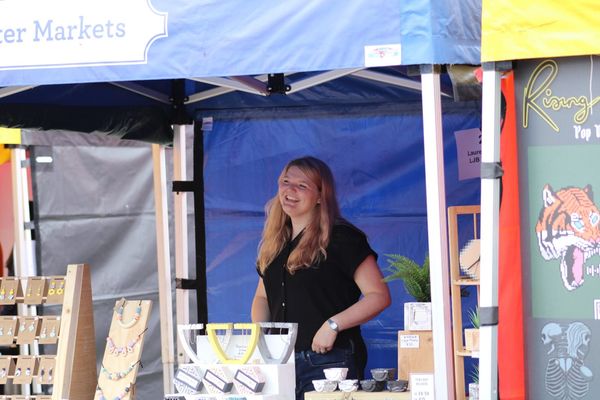
The route from idea to first pitch
Starting out has a sensible order. The steps below follow the order most councils and trade bodies describe, and each links to a fuller guide in this site.
- Choose a product and an event type that suit each other.
- Pick a pitch route: casual, temporary or permanent market licence, a private event, or street trading with consent.
- Decide how to trade and register for tax, and keep records from day one.
- Register food activity with the council if you sell food, and complete hygiene training.
- Arrange public liability insurance and any other cover you need.
- Learn the selling rules: prices, weights and measures, and consumer rights.
- Do a simple risk assessment and set up safely.
- Book two or three trial pitches and record the results.
Choose what to sell and where
The National Careers Service describes market trading as self-employed work in which you source or make products, set up a stall, serve customers, handle cash and card payments and keep sales records. It adds that the work is outdoors in all weather and can be physically demanding (see National Careers Service: market trader).
It suggests starting by working part time on a stall at an indoor market, a pop-up, a craft or seasonal market or a festival, learning from experienced traders. Walking a few events as a customer, and watching which stalls hold a queue, costs nothing. Our guides to choosing what to sell and finding events and markets go further.
Pick a pitch route and check the licence you need
Park Insurance, an insurance broker, describes three kinds of market trader licence in a 2019 article: casual for occasional traders, temporary (from a few days up to six months and often used as a trial) and permanent (typically 12 months with a fixed pitch). It says council documents vary, and can include ID, proof of address, a National Insurance number and proof of public liability insurance (see Park Insurance: how to get a market trader licence). The article dates from 2019, so confirm current rules with the council.
West Suffolk Council's start-up guidance (last updated March 2022) allows casual trading for up to 12 weeks without a licence, so new traders can test how they and their products perform before applying for a permanent one (see West Suffolk Council: market business start-up guidance). Arrangements are different in each council area.
In Gala Tent's experience, organisers sell pitches in two ways: per space, for example 3m x 3m or 8m x 10m, or by frontage, for example a 3m x 12m pitch where you pay for 3m of frontage. Check which applies before you compare prices.
GOV.UK says you may need a street trading licence to trade in the street in England and Wales, that you might not need one with a pedlar's certificate, and that councils can refuse a licence or grant fewer days than you asked for. It states trading without a licence can bring a fine of up to £1,000 (see GOV.UK: street trading licence). Our guides to whether you need a licence, street trading consent and booking a pitch at a market cover the detail.
Register for tax and keep records
GOV.UK says a sole trader is the simplest structure, that you can start trading without registering, and that you must register for Self Assessment if you earn more than £1,000 in a tax year (6 April to 5 April). You must keep records once you start (see GOV.UK: what a sole trader is). Our guide to sole trader or limited company helps with the structure choice.
GOV.UK describes a £1,000 trading allowance per tax year. Below it you generally do not need to tell HMRC, though you must keep records. Above it, you register for Self Assessment by 5 October after the end of the tax year, and you can deduct the allowance or your actual expenses, not both (see GOV.UK: trading allowance). GOV.UK's Self Assessment registration page says that for the tax year 6 April 2025 to 5 April 2026 people had to tell HMRC by 5 October 2026 or risk a penalty (see GOV.UK: register for Self Assessment).
GOV.UK also sets out when Making Tax Digital for Income Tax applies, by qualifying income.
| Tax year used for the test | Qualifying income over | Start date |
|---|---|---|
| 2024 to 2025 | £50,000 | 6 April 2026 |
| 2025 to 2026 | £30,000 | 6 April 2027 |
| 2026 to 2027 | £20,000 | 6 April 2028 |
Source: GOV.UK: find out if and when you need to use Making Tax Digital for Income Tax. GOV.UK says HMRC checks your return each year and writes to you if you need to start.
For records, GOV.UK says to keep all sales and income, all business expenses and proof such as receipts, bank statements and till rolls (see GOV.UK: business records). As of November 2026, the VAT registration threshold on GOV.UK is £90,000 of taxable turnover (see GOV.UK: VAT thresholds).
If you sell food: register and train
North Yorkshire Council says anyone who sells, prepares, stores or distributes food to the public must register, mobile traders included, at least 28 days before they start trading. It states registration is free and done online at register.food.gov.uk/new (see North Yorkshire Council: register a food business). Adur and Worthing Councils add that mobile caterers register with the council where the unit is normally kept overnight (see Adur and Worthing: mobile catering and market stalls).
Essential Food Hygiene offers an online street food course priced at £12.99 plus VAT as of November 2026. Its page says local authority officers recommend refreshing food hygiene training every three years (see Essential Food Hygiene: how to start a street food business). The course page gives no legal requirement, so confirm what your council expects. Our food business registration guide and guide to starting a food stall cover this fully.
Insurance
Braintree District Council's market trader terms require public liability cover of at least £5 million and say evidence is needed when applying, at renewal and on request (see Braintree District Council: market trader terms). Levels differ by market, so check the terms of the event you book.
Park Insurance's 2017 festival guide, written for event organisers, says public liability insurance is a must and employers' liability insurance is needed if you employ staff (see Park Insurance: festival planning checklist). West Suffolk Council's guidance says members of the National Market Traders Federation are covered under an umbrella public, products and employers' liability policy, and that product liability is worth considering. See our guides to public liability insurance and what organisers ask to see.
Know the selling rules
Derbyshire County Council's trading standards code for market sellers says traders must follow price marking and weights and measures law, and that goods must match their description, be of satisfactory quality and be fit for purpose (see Derbyshire: code of practice for markets and car boot sales). Selling counterfeit, illegal or age-restricted goods to under-age buyers is an offence.
Pembrokeshire Trading Standards notes that sales made away from a trader's usual premises, including street trading and pop-up sales, carry a 14-day cancellation right for the consumer, and that surcharges are banned for card and electronic payments (see Pembrokeshire: one-day sales, pop-up shops and street traders). Ask your local Trading Standards team how this applies to the goods you sell. Our guide to pricing products for events covers price display, and taking card payments at events covers payment methods.
Risk assessment and safe set-up
The Health and Safety Executive says employers must protect employees and others from harm, and that the minimum steps are to identify hazards, judge who could be harmed and how seriously, then remove or control the risk. It suggests self-employed people check whether health and safety law applies to them (see HSE: risk assessment). A written risk assessment is worthwhile for any stall; read our guide to risk assessments for event stalls.
Wind is the main safety issue for gazebo traders. Edenbridge Town Council's policy, adopted in March 2025, requires at least 12kg on each gazebo leg, with two weights recommended (see Edenbridge Town Council: adverse weather policy). Our guide to setting up a market stall compares several councils' rules.
Your first pitch and what it costs
Pitch fees vary. Braintree District Council's 2025/26 schedule lists a 3m street market pitch at £25.45 (see Braintree street market), and Redditch Borough Council's 2026 list shows a casual single stall at £39.00 on a Thursday and £41.50 on a Saturday (see Redditch 2026 market fees). Add stock, fuel, insurance, card charges and your own time. Our start-up costs guide lists the items to plan for.
In Gala Tent's experience, traders typically spend a few hundred pounds on a cheaper gazebo, then return for a proper heavy duty shelter after a couple of seasons, or once the low cost version has been broken by adverse weather. Gala Tent's advice is that the commonest mistake traders make is using a cheap shelter. Its recommended minimum is the Gala Shade Pro 40, which it describes as lightweight, cost effective and commercial quality. Gala Shade is part of the same group as Gala Tent; see the Gala Shade site and its page on gazebos for market trading.
Book two or three pitches at different kinds of event and record takings, costs, footfall and best sellers for each. GOV.UK's 2012 start-up tips for market stalls advise arriving early, bringing plenty of change and getting to know other traders (see GOV.UK: top 10 tips for market stall start-ups). Our first market day checklist lists what to bring.
Start-up checklist
- Pick one product range and visit three events as a customer.
- Ask the council or organiser which pitch route and licence applies.
- Set up as a sole trader or limited company and keep records from your first sale.
- Register for Self Assessment if your gross trading income will pass £1,000.
- If you sell food, register at least 28 days ahead and complete hygiene training.
- Arrange public liability insurance at the level the event requires.
- Check price marking, weights and measures and consumer rules for your goods.
- Complete a risk assessment and buy weights suited to the gazebo.
- Book two or three trial pitches and record results.
Frequently asked questions
Do I need a licence to start trading at events?
It depends on where you trade. GOV.UK says you may need a street trading licence for trading in the street, while councils run their own market licences and private events set their own terms. Ask the council or the organiser before you buy stock. Trading without a required street licence can bring a fine of up to £1,000.
When do I have to register with HMRC?
GOV.UK says you must register for Self Assessment if you earn more than £1,000 in a tax year (6 April to 5 April). The £1,000 trading allowance means income at or below that level generally needs no report. If you go over it, register by 5 October after the end of the tax year.
How early must I register a food stall?
North Yorkshire Council says food businesses, including mobile traders, must register at least 28 days before they start trading, and that registration is free. Your own council will have its own page, so check it before you book a pitch. Hygiene training and allergen information are separate steps.
How much public liability insurance do I need?
It depends on the market or event. Braintree District Council's terms require at least £5 million for its markets, and evidence is needed at application and renewal. In Gala Tent's experience most events require at least £5 million, although some require less, and some providers offer one-off event cover of around £2 million. Check the booking terms of each event, because a cheaper policy may be refused.
Can I trade part time while employed?
Yes. GOV.UK says you can be a sole trader as your only job or alongside employment. Your trading income still counts: if gross trading income passes £1,000 in a tax year you must register for Self Assessment, and you should keep records from your first sale.
How many trial pitches should I book?
Two or three is a sensible start. Choose different kinds of event, such as a weekly market and a one-day fair, and record takings, costs and best sellers for each. West Suffolk Council allows up to 12 weeks of casual trading in its markets so that new traders can test their products.
Gazebos built for regular pitches
Once a pitch is confirmed, the stall needs to fit it. Gala Tent makes market stall gazebos for traders who set up week after week.
Useful pages on our sister sites
Event Industry Trader is published by Gala Tent. These pages from Gala Tent and the wider Gala group go further on the kit, branding and payments covered here.
- Gala Tent
How to start a market stall
Kit, pitch and first-day set up from a company that supplies traders every week.
- Gala Tent
Gazebos and kit for market traders
What regular traders use to set up and pack down quickly.
- Gala Graphics
Branding guide for market traders
What to print first and where it pays back.
Where to check the rules
- National Careers Service: market trader
- Park Insurance: how to get a market trader licence
- West Suffolk Council: market business start-up guidance
- GOV.UK: street trading licence
- GOV.UK: what a sole trader is
- GOV.UK: trading allowance
- GOV.UK: register for Self Assessment
- GOV.UK: Making Tax Digital for Income Tax
- North Yorkshire Council: register a food business
- Essential Food Hygiene: how to start a street food business
- Braintree District Council: market trader terms
- Park Insurance: festival planning checklist
- GOV.UK: VAT thresholds
- GOV.UK: business records if you are self-employed
- Adur and Worthing Councils: mobile catering and market stalls
- Derbyshire County Council: code of practice for markets and car boot sales
- Pembrokeshire Trading Standards: one-day sales, pop-up shops and street traders
- HSE: risk assessment
- Edenbridge Town Council: adverse weather policy
- Braintree District Council: street market pitch fees
- Redditch Borough Council: market fees for 2026
- Gala Shade
- Gala Shade: best gazebo for market trading
- GOV.UK: top 10 tips for market stall start-ups (2012)
Rules vary by council and by event. Confirm requirements with the organiser and the relevant authority before you act.