Farmers market stall ideas
Farmers market stalls sell produce you grow, rear, bake or make yourself, within a set distance of the market. Typical categories are primary produce, processed foods and drinks, with some markets admitting crafts. Radius limits, insurance levels and local ingredient shares vary by market, so read each market's criteria before you apply.
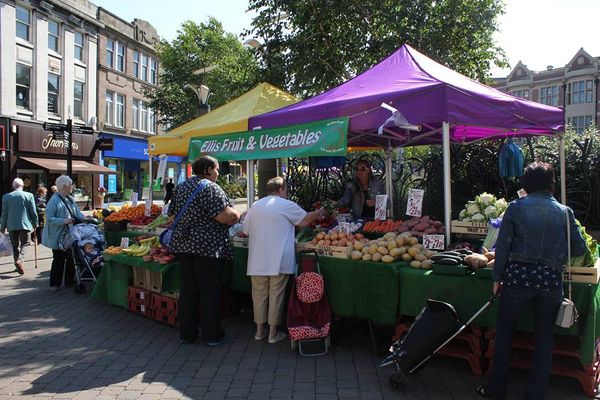
How farmers market stall ideas differ from other markets
Most market stalls can sell bought-in stock. Farmers markets usually cannot. The ideas that fit are the ones where the stallholder is the producer, and the stallholder or someone directly involved in production is on the stall to answer questions. Warwick District Council describes this in its farmers market stallholder FAQ as three golden rules: local producers, own produce, and stallholder involvement.
Farmers market criteria are set by each market. The Morpeth advice document published through Northumberland County Council refers to FARMA criteria, so FARMA criteria are a reference some markets follow. FARMA's own farmers market page says a farmers market exists mainly to help local farmers and producers sell what they have grown or made directly to their community, that stallholders should be recruited from as close to the market as possible, and that consumers should only buy items produced by the business selling them. It gives no mileage limit, which is why each market sets its own radius. FARMA's about page describes certification as an independently assessed scheme confirming that a market meets recommended criteria, with certified markets displaying a FARMA logo. This guide draws on the published rules of several councils and operators. It is general guidance, not legal advice. Contact the market operator and your council about your own case.
Primary produce ideas
Primary produce is the core: fruit, vegetables, herbs, eggs, meat, dairy, honey, plants and flowers. Arundel Town Council's farmers market criteria give this list under Category 1 and add bakery, wine, cider, beer and fruit juice, locally caught or farmed fish and seafood, and planted baskets if the producer grew and arranged them.
Meat and animal products bring extra paperwork. Arundel says meat producers may be asked for slaughter certificates and animal movement records, and that game sellers need a current game dealer's licence. Wakefield Council's registration page adds that businesses handling animal-origin food may need approval, with a site visit within 14 days and a written decision within 28 days of the determination.
Processed and added-value ideas
Preserves, chutneys, sauces, cakes, bread, ready meals, confectionery and pies are secondary produce. Arundel limits this category to handmade consumables where the main ingredients are primary produce and requires at least 10 per cent of each product to be made from ingredients grown or produced within the local radius. Buying ingredients locally alone does not count.
Other markets use different shares. Stafford Borough Council's conditions and guidelines require added-value producers to source at least 10 per cent of ingredients within 30 miles. Chichester's farmers market page says processed food should contain at least 30 per cent local ingredients where possible. Oundle's market regulations ask for at least one local raw ingredient. Compare your recipes with the local share before applying.
Drinks, alcohol, takeaway and craft ideas
Cider, beer, wine, juices and hot or cold takeaway food appear on several application forms. Oundle's categories include hot or cold takeaway food and drinks. Alcohol has its own steps. Stafford asks for a personal alcohol licence and a copy for market staff, and Arundel says the town council arranges the temporary event notice for market days. Chichester points alcohol sellers to its licensing requirements document.
Hot food adds fire and electrical rules. Stafford requires a suitable maintained fire extinguisher for anyone cooking on site and a current PAT certificate for electrical or gas equipment.
Some farmers markets admit crafts. Arundel allows handmade craft made locally within 40 miles, with guest craft traders up to three times a year. Chichester describes its stallholders as growers, rearers, bakers and preservers, so ask whether crafts are accepted. Check the market's category list before planning a non-food stall.
How far is local? Radius limits compared
| Market or area | Local radius | Beyond the radius | Processed food rule |
|---|---|---|---|
| Warwick District Council | Normally 30 miles | Not stated on the FAQ page | Secondary products should use local ingredients where appropriate |
| Stafford (Market Square and Stone) | Up to 30 miles | 30 to 40 miles if vacancies exist. Up to 50 miles only in very special circumstances | At least 10 per cent of ingredients local (30 miles) |
| Kent Farmers Market Association | 35 miles | Up to 50 miles for hard-to-source produce, not classed as local | As many local ingredients as possible |
| Oundle | 40 miles | Producers beyond 40 miles may be considered for the most local supply of a specialist product | At least one local raw ingredient |
| Arundel | 40 miles | No producer beyond 100 miles. Further producers only if no suitable local one exists | At least 10 per cent made from local-radius ingredients |
| Chichester | Within 50 miles | Not stated on the page | At least 30 per cent local ingredients where possible |
Sources: the Warwick FAQ, Stafford conditions, Kent Farmers Market Association standards, Oundle regulations, Arundel criteria and Chichester page. The Morpeth advice document says most FARMA certified markets in the north east of England define local as a 50 mile radius, accept produce up to 100 miles and give local producers preference when space opens.
Stallholder involvement, labelling and certification
Kent Farmers Market Association's standards say the stall may be run by the producer or someone they appoint who knows how the product is grown, reared or made, and that stalls must carry the business name. They add that organic or similar claims need a certificate and supporting documents on display. Oundle asks for the business name and address on the stall and for any assurance scheme certificates, and Arundel and Stafford ban genetically modified produce or ingredients.
Application paperwork is detailed. Oundle's application asks for a full product list, selling months, local ingredient details and signed declarations, and renews annually. Arundel lets you sell only the products listed on your initial application, with additions needing a further application. Morpeth's advice says to check that no one already sells the same product and that processed goods need a local ingredient list with estimated percentages and proof of origin.
Insurance, hygiene and fees
Kent Farmers Market Association asks for public, product and employee liability insurance plus relevant hygiene certificates, with proof given annually. Stafford asks for public, employer's and products liability and a certificate before trading. Arundel asks for £5 million public liability and £5 million product liability, Employers Liability normally at £10 million, and a food hygiene rating of at least 4 dated within three years.
On fees, Stafford Borough Council published £24.50 per stall (a single table or quarter of a marquee) as of November 2026, payable in advance. Chichester does not publish pitch fees on its page and says to contact the officer. Fees vary widely, so request the schedule.
Operator-run markets set their own terms. The Farmyard Market in Truro runs Saturday mornings from 09:00 to 13:00 on a farm site, according to its trader help centre, and its terms require public liability insurance, a risk assessment, local authority registration and a minimum 4 star hygiene rating for food traders. Gazebos must be weighted and stakes are not allowed, so plan your weights in advance. Gala Tent is one place to look for gazebo set-up information.
Setting up and preparing before you apply
The Morpeth advice document says new producers are welcome, that some markets have limited space and waiting lists, and that the range of produce wanted varies from market to market, so check what a market needs before applying. It also mentions information sessions run by the North East England Farmers' Markets group for people thinking of selling food from a kitchen, garden or workshop, which shows that regional groups can be a source of help.
On the day, Kent Farmers Market Association's standards say stalls must be clean and producers must remove their own rubbish, a point Oundle's regulations repeat. The Farmyard Market's stall setup page suggests practising your setup at home so you know where everything goes, using a clean tablecloth, and keeping a short printed note on origin, making process and ingredients for busy periods. Trader arrival at the Farmyard Market is between 07:30 and 08:45, with vehicles moved to the parking area by 9:00, so allow time to unload.
Choosing your idea: a selection framework
| Idea group | Producer rule | Paperwork seen | Seasonality and constraints |
|---|---|---|---|
| Fruit, vegetables, herbs, plants | Grown by you within the radius | Public and product liability. Organic certificate if you claim organic. | Oundle asks for selling months, so list the weeks you will have stock. |
| Meat, eggs, dairy, fish | Reared or caught by you | Hygiene rating, possible slaughter certificates and movement records (Arundel). Approval for some animal-origin food (Wakefield). | Check space limits and waiting lists. |
| Bakery, preserves, ready meals | Made by you with the market's local ingredient share | Ingredient list with local percentages and proof of origin (Morpeth advice). | Same product already sold on the market can block you. |
| Drinks and alcohol | Brewed or produced by you | Personal licence or temporary event notice arrangement (Stafford, Arundel). | Challenge 25 at Stafford. |
| Hot takeaway | Cooked by you | Extinguisher, PAT certificate (Stafford). Hygiene rating. | Power and pitch layout. |
Start with the category where your product is easiest to prove as yours. A producer with a clear local radius and a short ingredient list gets through applications faster than one who has to evidence several steps.
What to do next
- Measure the distance from your production site to three nearby farmers markets.
- Download each market's criteria and compare radius, local share and insurance.
- Write a full product list with ingredients and sources.
- Ask the operator how long applications take and whether a waiting list exists.
- Collect certificates: hygiene rating, insurance, organic or assurance scheme.
- Ask each market whether it follows FARMA criteria and what proof it wants.
- Book a trial stall and record what customers ask.
Frequently asked questions
Who can sell at a farmers market?
Producers who grow, rear, bake or make what they sell, or a family member or employee directly involved in production. Warwick District Council lists local producers, own produce and stallholder involvement as its golden rules. Bought-in stock is generally not allowed. Check the criteria of each market.
How local do I have to be?
It depends on the market. As of November 2026, Stafford's limit is 30 miles, Kent Farmers Market Association's is 35, Oundle and Arundel use 40, and Chichester uses 50 miles. Some markets allow producers from further away if they are the most local supplier of a product. Ask the operator.
What insurance do farmers market stallholders need?
Most published rules ask for public liability and products liability, and often employer's liability. Arundel asks for £5 million public liability and £5 million product liability, with employers liability normally at £10 million. Kent Farmers Market Association asks for public, product and employee liability. Check each market and your insurer.
Can I sell processed food made with some bought-in ingredients?
Usually yes, if you make it and meet the local ingredient share. Stafford and Arundel ask for at least 10 per cent local ingredients. Chichester says at least 30 per cent where possible. Oundle asks for one local raw ingredient. Keep an ingredient list with percentages and proof of origin.
Do I need a food hygiene rating?
Food traders at many markets do. Arundel asks for a rating of at least 4 dated within three years, and the Farmyard Market in Truro asks for a minimum 4 star rating and local authority registration. Register your food business with the council before you apply.
What does it cost to take a stall?
Fees are set by each market. Stafford Borough Council published £24.50 per stall for a single table or quarter of a marquee as of November 2026. Chichester and Warwick do not publish fees on the pages read, so ask the operator for the schedule.
Gazebos built for regular pitches
Once a pitch is confirmed, the stall needs to fit it. Gala Tent makes market stall gazebos for traders who set up week after week.
Useful pages on our sister sites
Event Industry Trader is published by Gala Tent. These pages from Gala Tent and the wider Gala group go further on the kit, branding and payments covered here.
Where to check the rules
- Warwick District Council: farmers market stall FAQ
- Northumberland County Council: Morpeth farmers market advice for traders
- Kent Farmers Market Association: standards for stallholders
- Stafford Borough Council: farmers markets conditions and guidelines
- Chichester District Council: farmers market
- Arundel Town Council: farmers market criteria guidance
- Oundle Town Council: farmers market regulations 2024
- The Farmyard Market: trader help centre
- The Farmyard Market: terms and conditions
- Wakefield Council: register a food business
- FARMA: farmers market
- The Farmyard Market: market stall setup
- FARMA: who is FARMA
Rules vary by council and by event. Confirm requirements with the organiser and the relevant authority before you act.