Types of market stall
Market stalls fall into a few main types: general street market stalls, farmers' and food markets, craft and maker fairs, festival and event pitches, and indoor market units. Choose by what you sell, the audience you want and how often you can trade.
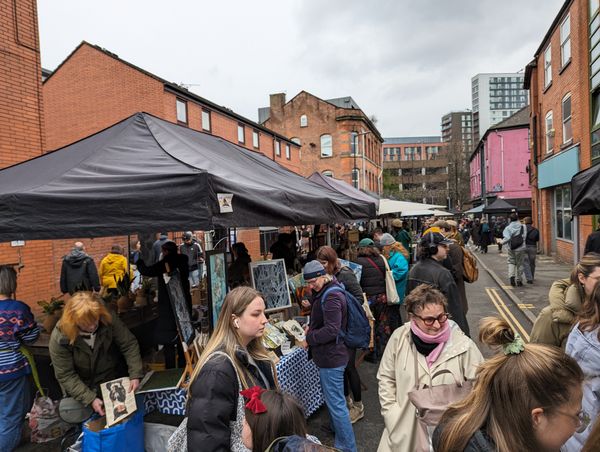
Street and town centre market stalls
These are the regular stalls in a town centre, run by a council or market operator on set days. Customers come for everyday shopping, so stalls selling practical goods, fresh produce, clothing and household items tend to suit them. Pitches are often allocated by the market office, with a mix of casual and permanent traders. Footfall tends to follow the working week and local habits, so spend a day watching before you apply.
Farmers' and food markets
These markets focus on food and drink, often with a bias towards local producers. Organisers usually set criteria for what you can sell and where it comes from, and food traders register their business with the local council. See food and drink traders for the food side in more detail.
Craft and maker fairs
Craft fairs gather makers selling handmade goods, from jewellery to prints and homeware. Organisers often select traders by application, sometimes with photos of the work, to keep the range varied. They suit sellers who can tell the story behind a product, and visitors often come specifically to meet makers and buy gifts.
Festival and event pitches
Festivals, shows and sporting events bring large crowds for a short window. The organiser picks the traders, sets the pitch layout and usually asks for insurance and safety documents. Read trading at festivals and events before you apply. Motor events have their own character, covered in the motorsport and automotive events hub.
Indoor market halls and units
Some towns have indoor markets with fixed units that you rent for longer periods. These suit traders who want a regular presence and shelter from the weather, and they involve a longer commitment than a one-day pitch.
Casual and permanent pitches
Many council markets offer casual pitches, which you book for a particular day, and permanent pitches, which you hold on a regular basis. Casual pitches are a sensible way to test a market before you commit. Ask the market office how each type works in that area, because arrangements vary.
Seasonal and pop-up markets
Many towns hold seasonal markets, such as Christmas markets, spring fairs and summer fetes, and organisers also run one-off pop-up markets. These can bring a lot of footfall in a short time, and pitches may be allocated by application. They suit traders with a seasonal product, and they are a good way to try a new audience without a long commitment.
Matching a stall type to a product
Think about who buys your product and where they already shop.
- Everyday goods and household items suit regular town centre markets.
- Produce, baked goods and drinks suit farmers' and food markets.
- Handmade gifts and art suit craft fairs and seasonal markets.
- Impulse purchases and refreshments suit festivals and shows.
- Specialist products suit events that gather enthusiasts, such as car shows.
How to choose
- Match the type to your product and your customer.
- Count your available days, because regular markets reward consistency.
- Compare the pitch fee and kit needs, using pitch fees explained.
- Visit as a customer first and see which traders have queues.
Frequently asked questions
Which type of market stall is best for beginners?
A local street or community market with casual pitches is a common first step, because the commitment is low and you can learn what sells.
Are craft fairs and farmers' markets the same?
They are different. Farmers' markets centre on food and drink, and craft fairs centre on handmade goods. Each organiser sets its own rules on what traders may sell.
Do festival stalls cost more than market stalls?
Pitch fees vary widely between events. Compare the fee with the likely footfall and your costs for the day before you book.
Can I trade at more than one type of market?
Yes. Many traders mix regular markets with a few larger events, which spreads the risk.
Gazebos built for regular pitches
Once a pitch is confirmed, the stall needs to fit it. Gala Tent makes market stall gazebos for traders who set up week after week.
Useful pages on our sister sites
Event Industry Trader is published by Gala Tent. These pages from Gala Tent and the wider Gala group go further on the kit, branding and payments covered here.
Where to check the rules
Rules vary by council and by event. Confirm requirements with the organiser and the relevant authority before you act.