What is a market stall?
A market stall is a small temporary retail pitch, usually a table or counter under a canopy, where a trader sells goods or food directly to passers-by at a market, fair or event. The trader rents the pitch for a day or a set period and sets up and packs down each time.
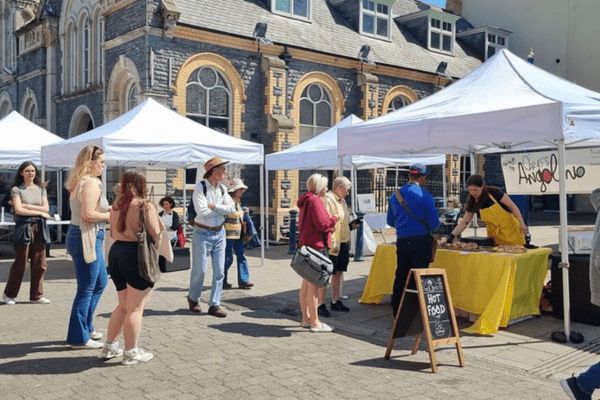
The short definition
A market stall is a single selling position within a larger market or event. Customers walk past, look at the display and buy on the spot. Market stalls are a long-established form of retail, and the format is still common in town centres, market halls and at events across the UK.
What a stall is made of
Every stall has the same basic parts, whatever it sells.
- A pitch, which is the patch of ground or the counter space allocated to you.
- A structure, such as a gazebo, a traditional market frame or a counter in a market hall.
- A table or display that shows the products.
- Stock with clear prices.
- A way to take payment, usually cash plus cards or QR payments.
- Signage that tells customers who you are and what you sell.
Where market stalls operate
Stalls appear wherever organisers gather traders and visitors in one place.
- Street markets and town centre markets run by councils or market operators.
- Indoor market halls with fixed units.
- Farmers' markets and food markets.
- Craft fairs and Christmas markets.
- Festivals, shows and sporting events, where the organiser chooses the traders.
How a stall compares with a shop
A shop usually means a lease, fixed opening hours and a permanent fit-out. A stall means renting a pitch for a day, a week or a season and bringing your own kit. That lower commitment is why many new traders begin with a stall. You can try a product, learn from real customers and tie your costs to the days you trade.
Why traders choose a stall
A stall is a practical way to meet customers face to face. You see which products draw attention, hear the questions people ask and can change your range from one week to the next. Costs stay tied to the days you trade, and a stall can sit alongside an online shop or another job. Many established businesses began with a table at a local market.
A typical trading day
- Arrive at the time the organiser sets and unload at your pitch.
- Build the gazebo, weight it and set out the table and stock.
- Test your payment method and settle your cash float.
- Trade through the market hours, restocking as you sell.
- Pack down, clear the pitch and head home.
The guide to how to set up a market stall covers the set-up in more detail.
Who runs a market stall
Stallholders include makers selling their own work, food producers, resellers and established businesses taking a product to a new audience. Most individuals start as a sole trader. The guide to sole trader or limited company explains the two common set-ups.
What a trader needs to know first
Rules depend on the type of market and the council area. A council market sets its own terms, a private organiser sets another, and street trading on the public highway usually involves the local council. Food sellers register as a food business. Read do I need a licence to trade before you apply for a pitch, and arrange insurance, because most organisers ask for proof of cover.
Where to go next
Frequently asked questions
Is a market stall the same as a pitch?
The pitch is the space you are allocated. The stall is everything you put on it: the structure, table, stock and signage.
Do you need a licence to run a market stall?
It depends on the market. Council markets, private events and street trading each have different requirements, and food sellers register with their local council. Ask the organiser or the council first.
Can you run a market stall part-time?
Yes. Many traders start at weekends alongside other work. You still report your trading income to HMRC.
What can you sell on a market stall?
Many things, from food and plants to crafts, clothing and accessories. An organiser may limit the range so that stalls do not overlap, so check the trader terms.
Gazebos built for regular pitches
Once a pitch is confirmed, the stall needs to fit it. Gala Tent makes market stall gazebos for traders who set up week after week.
Useful pages on our sister sites
Event Industry Trader is published by Gala Tent. These pages from Gala Tent and the wider Gala group go further on the kit, branding and payments covered here.
Where to check the rules
Rules vary by council and by event. Confirm requirements with the organiser and the relevant authority before you act.